Understanding the difference between stimulant and non-stimulant ADHD medications is the first step toward finding an effective, personalized treatment plan. While both classes work by optimizing chemical pathways in the brain, they do so through entirely different mechanisms, timelines, and side-effect profiles. [1]
The breakdown below highlights how these choices differ to help you or your loved ones make an informed decision alongside a certified specialist. [1]
What Are Stimulants and Non-Stimulants?
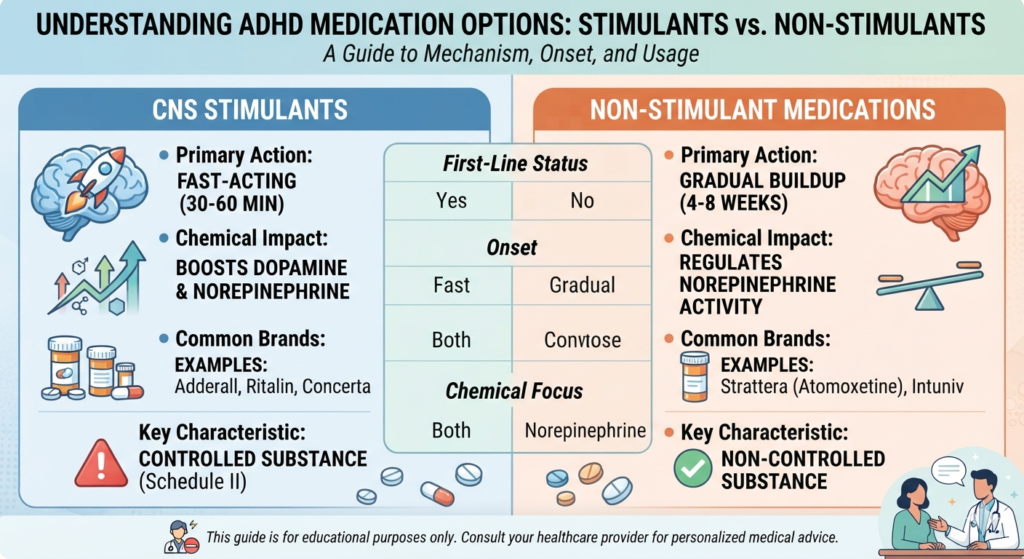
| Feature | Central Nervous System (CNS) Stimulants | Non-Stimulant Medications |
|---|---|---|
| First-Line Status | Yes, the primary option for children and adults. | Secondary option or alternative treatment. |
| Primary Chemical Impact | Elevates dopamine and norepinephrine levels. | Accumulates or targets norepinephrine gradually. |
| Onset of Action | Fast-acting (usually within 30 to 60 minutes). | Gradual buildup (takes 4 to 8 weeks). |
| Controlled Substance | Yes (Schedule II due to misuse potential). | No (lower risk of dependency). |
CNS Stimulants: Quick Action and High Efficacy
Stimulants are the most frequently prescribed medications for ADHD management. They act quickly on brain networks to manage executive functioning, reduce impulsivity, and improve mental focus. [1, 2]
- How They Work: They block the reuptake of dopamine and norepinephrine, allowing higher concentrations of these chemical messengers to remain active in the synapses. [1]
- Common Categories:
- Methylphenidate-Based: Brands like Concerta and Ritalin.
- Amphetamine-Based: Brands like Adderall and Dexamphetamine. [1, 2, 3]
- Typical Side Effects: Decreased appetite, difficulty falling asleep, headaches, and a “rebound effect” of mild irritability as the dosage wears off later in the day. [1, 2]
Non-Stimulants: Steady and Sustained Support
Non-stimulants are primarily prescribed when an individual experiences severe side effects from stimulants, has specific medical contraindications (like cardiac risks), or carries a history of substance misuse. [1, 2]
- How They Work: Instead of forcing an immediate surge of dopamine, these options systematically alter how norepinephrine receptors process signals to support attention, emotional regulation, and impulse control. [1, 2]
- Common Categories:
- Typical Side Effects: Fatigue or sleepiness during the day, dry mouth, nausea, and changes in blood pressure. [1, 2, 3]
Finding the Right Treatment Strategy
Because every neurodivergent individual responds differently to pharmacology, finding the correct approach often requires a controlled process called titration—where a clinician starts with a minimal dose and builds up slowly. For many people, a combination of medication management and targeted behavioral therapy yields the best long-term success. [1, 2, 3]
If you are ready to explore your options, consider scheduling an assessment with a verified psychiatric professional. [1]
⚠️ Medical Disclaimer
The information provided in this article is for educational and general informational purposes only and is not a substitute for professional medical advice, diagnosis, or treatment. Always look closely at your physical medication labels and consult with a licensed, board-certified healthcare provider before starting, stopping, or altering any medication plan.