
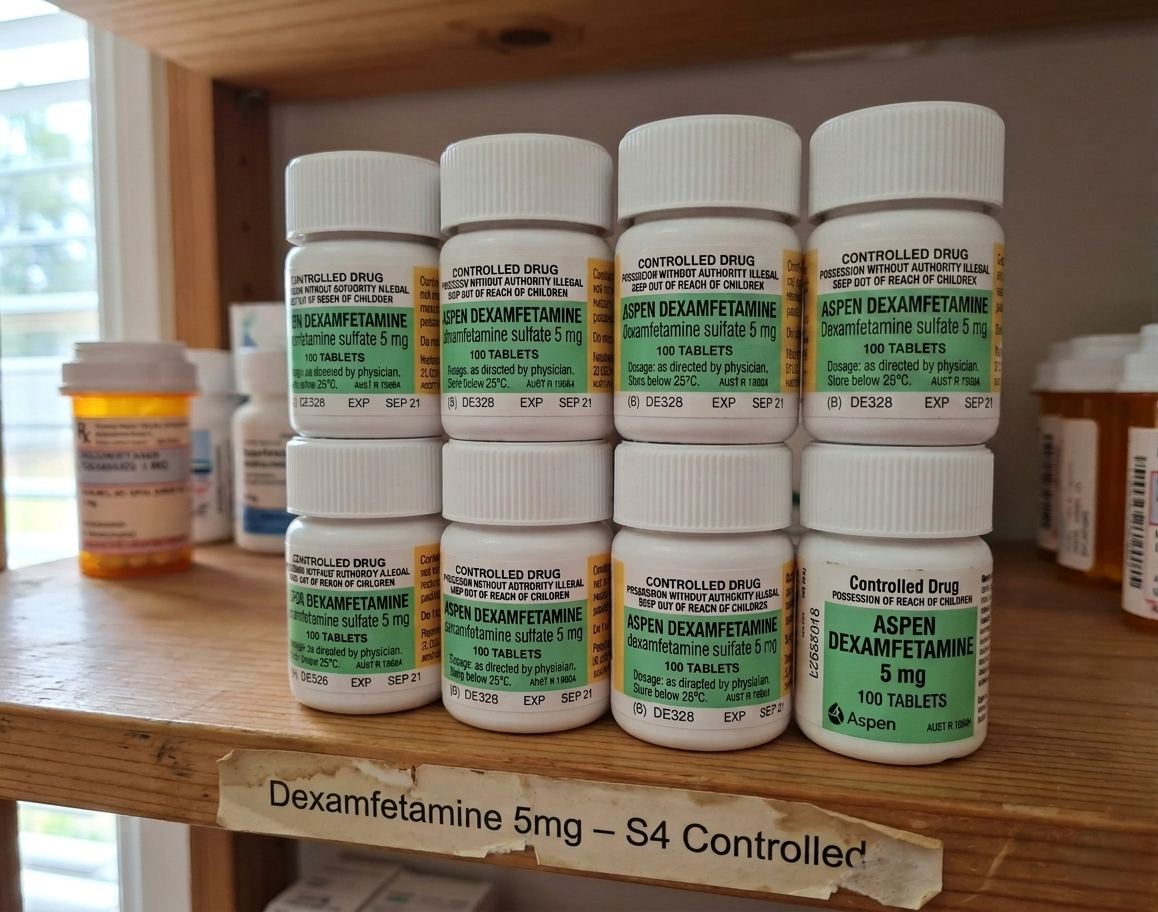
Dexamphetamine
Dexamphetamine: Uses, Brand Names, and Side Effects
Dexamphetamine is a prescription stimulant medication primarily used to manage neurodevelopmental and sleep disorders. Below is a comprehensive overview of its uses, appearance, alternative names, and potential side effects based on clinical guidelines.
What is Dexamphetamine?
Dexamphetamine is a potent central nervous system stimulant. It works by accelerating the chemical messages traveling between the brain and the body.
Primary Medical Uses
Medical professionals typically prescribe this medication for two main conditions:
-
- Attention Deficit Hyperactivity Disorder (ADHD): Helps improve concentration, impulse control, and hyperactivity. It is estimated to be effective for roughly 80% of children diagnosed with ADHD.
- Narcolepsy: Helps manage extreme daytime drowsiness and sudden attacks of sleep.
Regulatory Status
Because of its high potential for misuse, illicit distribution, and dependence, dexamphetamine is a strictly controlled substance. In many jurisdictions, such as Australia, prescriptions require specific authorization from state or territory health departments. Purchasing this medication online without a valid prescription is illegal and highly dangerous.
Common Brand Names and Street Names
Dexamphetamine is marketed under several pharmaceutical brand names and is also referred to by various colloquial terms.
Pharmaceutical & Generic Names
-
- Dexamphetamine Sulfate
- Lisdexamfetamine (a prodrug formulation)
- Vyvanse
- Dexedrine
Common Slang Terms
-
- Dexies
- Dexy
Physical Appearance and Administration
Dexamphetamine is manufactured in specific medical formulations to ensure controlled dosages.
-
- Appearance: It is most commonly distributed as a small, round, white tablet. It is also available in capsule form.
- Formulations: Available in immediate-release or sustained-release (extended-release) variations.
- Administration: It is medically intended to be swallowed whole. Misusing the drug by crushing, snorting, or injecting it drastically increases the risk of severe health complications and overdose.
Factors Influencing Drug Effects
The physical and psychological impact of dexamphetamine varies significantly from person to person. Key variables include:
-
- The individual’s size, weight, and general health status
- Whether the person’s body has developed a tolerance to the drug
- Concurrent consumption of other substances or prescription medications
- The specific dosage amount consumed
Potential Side Effects
While dexamphetamine can effectively manage symptoms, it carries a risk of side effects. Most physical side effects are mild and tend to occur during the first few days of starting the treatment as the body adjusts.
Common Physical Side Effects
-
- Nausea and vomiting
- Abdominal pain
- Headaches and dizziness
- Restlessness, nervousness, or tremors
- Sleep difficulties and insomnia
- Loss of appetite, weight loss, or slower growth rates in pediatric patients
Cardiovascular Side Effects
-
- Increased heart rate
- Elevated blood pressure
- Heart palpitations
Psychological Side Effects
-
- Mood changes, including increased depression or heightened irritability
Disclaimer: This information is for general educational purposes only and does not substitute for professional medical advice. Always consult a qualified healthcare provider regarding prescriptions, dosages, and medical conditions. Double-check your physical medication labels to confirm accurate product and dosage information.




Reviews
There are no reviews yet.